Punchcut · Google Photos
About the project. This project supported Google in showing how Google Photos’ machine learning could integrate across a partner’s broader hardware ecosystem. The focus was an expanded vision where users reach their memories on every surface — from handhelds to smart refrigerators. Distinct user flows and tangible feature narratives helped stakeholders see the practical value of the integration.
My role. I designed UI screens for the new feature concepts and proposed notification patterns for TV interfaces. I also built the graphics that carry the user journeys across surfaces — handheld, foldable, TV, watch, tablet, and smart refrigerator — so the pitch could demonstrate the product on each screen.
Impact. The visioning work fed the broader integration strategy between Google and Samsung. Google Photos went on to ship on Samsung’s Family Hub™ refrigerator, where families could display and sync shared albums on the fridge screen.
Samsung US: how to add Google Photos to your Family Hub refrigerator ↗
Intelligent upscaling, powered by Google’s machine learning, that vividly revives memories across devices.
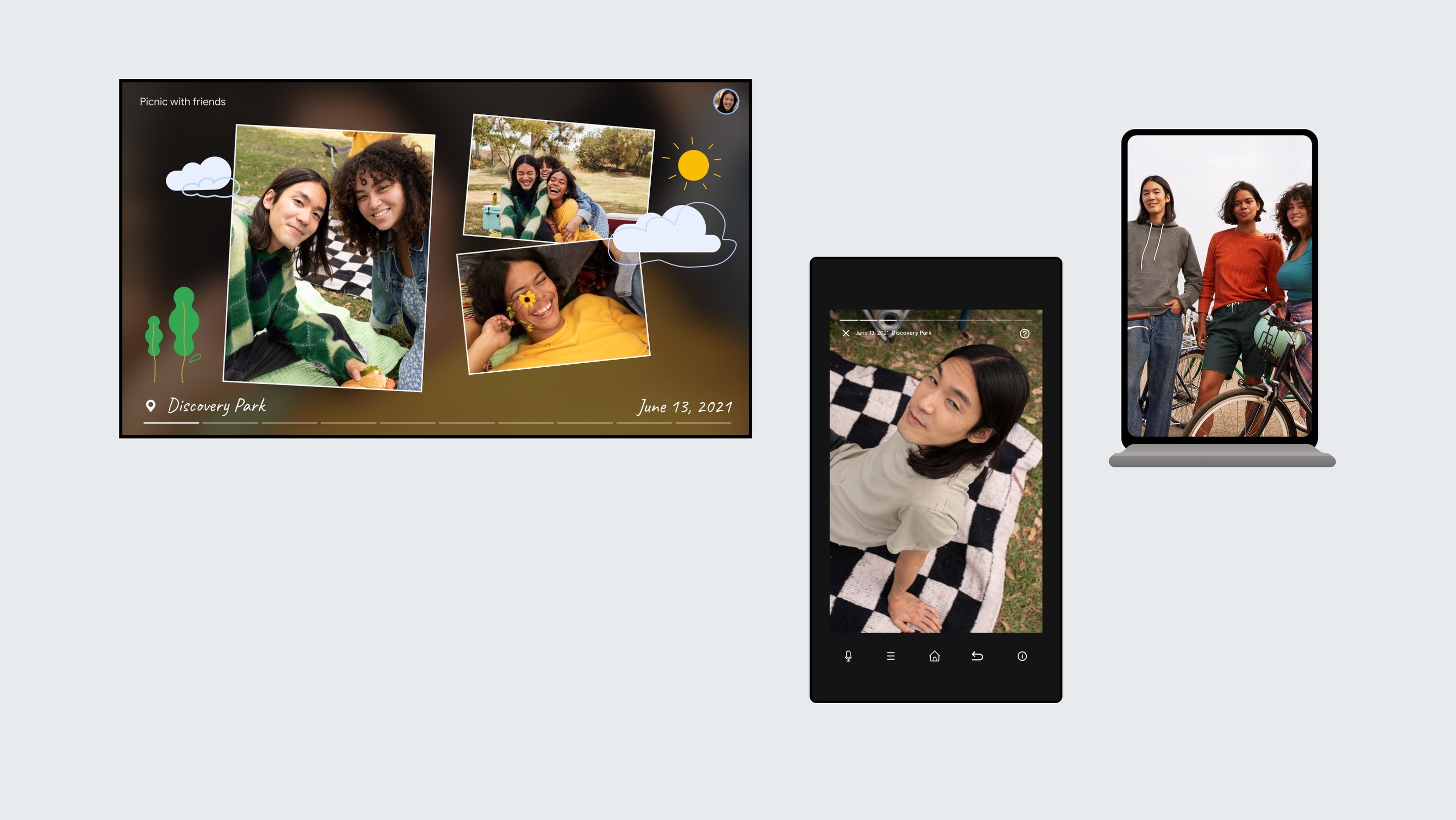
The Frame TV, Samsung Fridge, and Home Hub
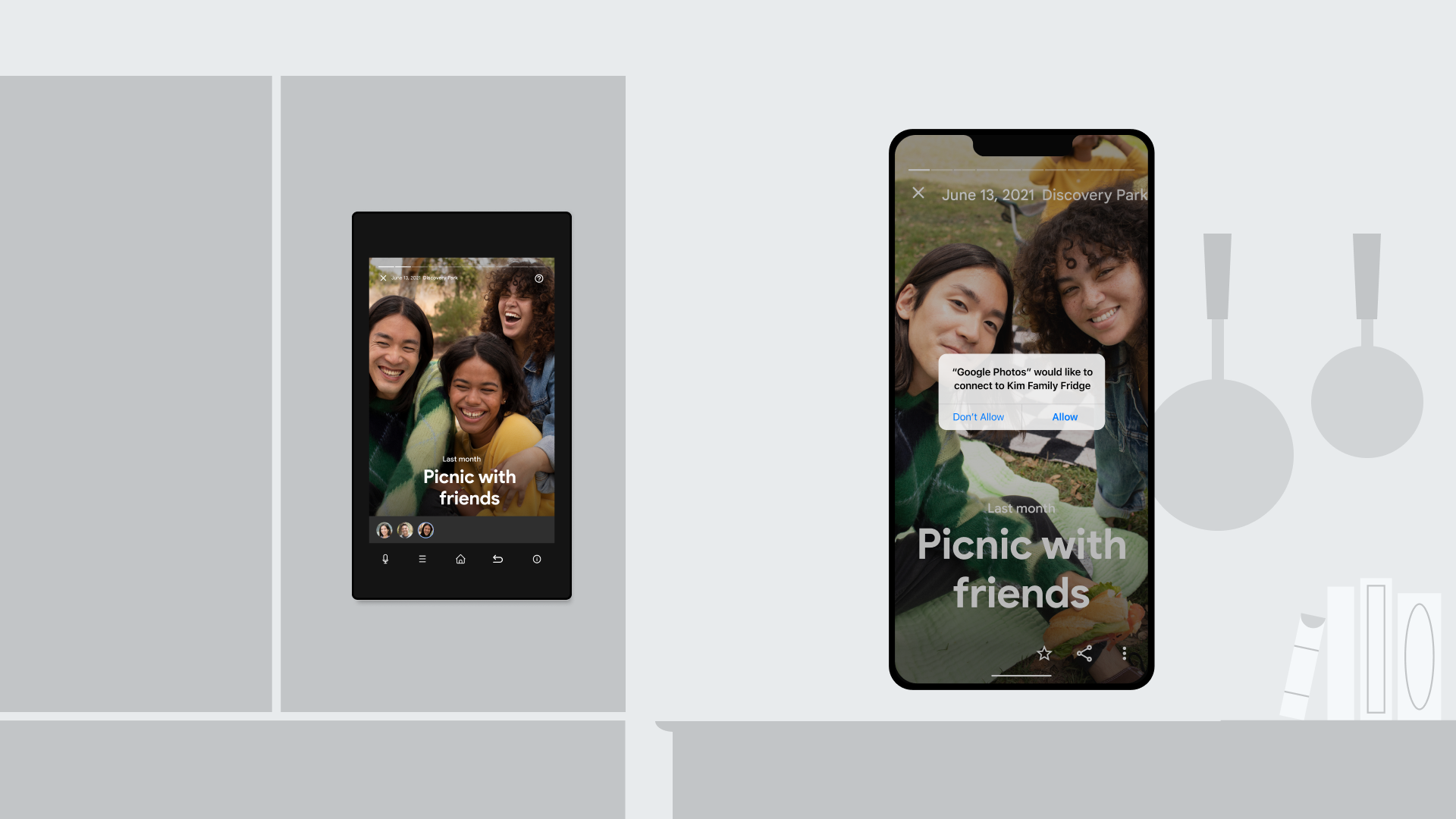
Samsung Fridge and iPhone
Machine learning picks the best face for every person in a group shot, so nobody is left blinking — one tap and the photo is ready to share.
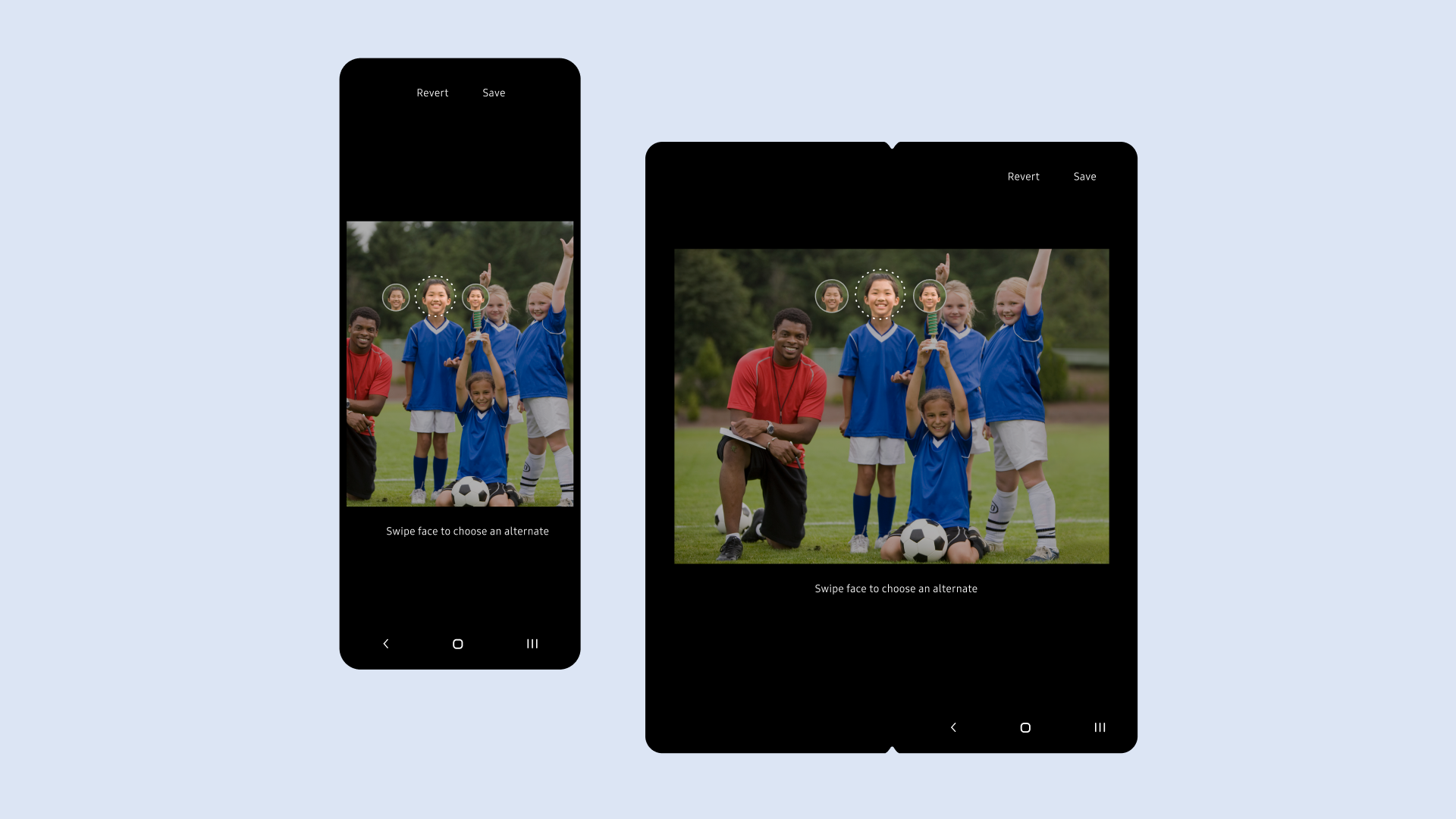
Samsung’s Fold
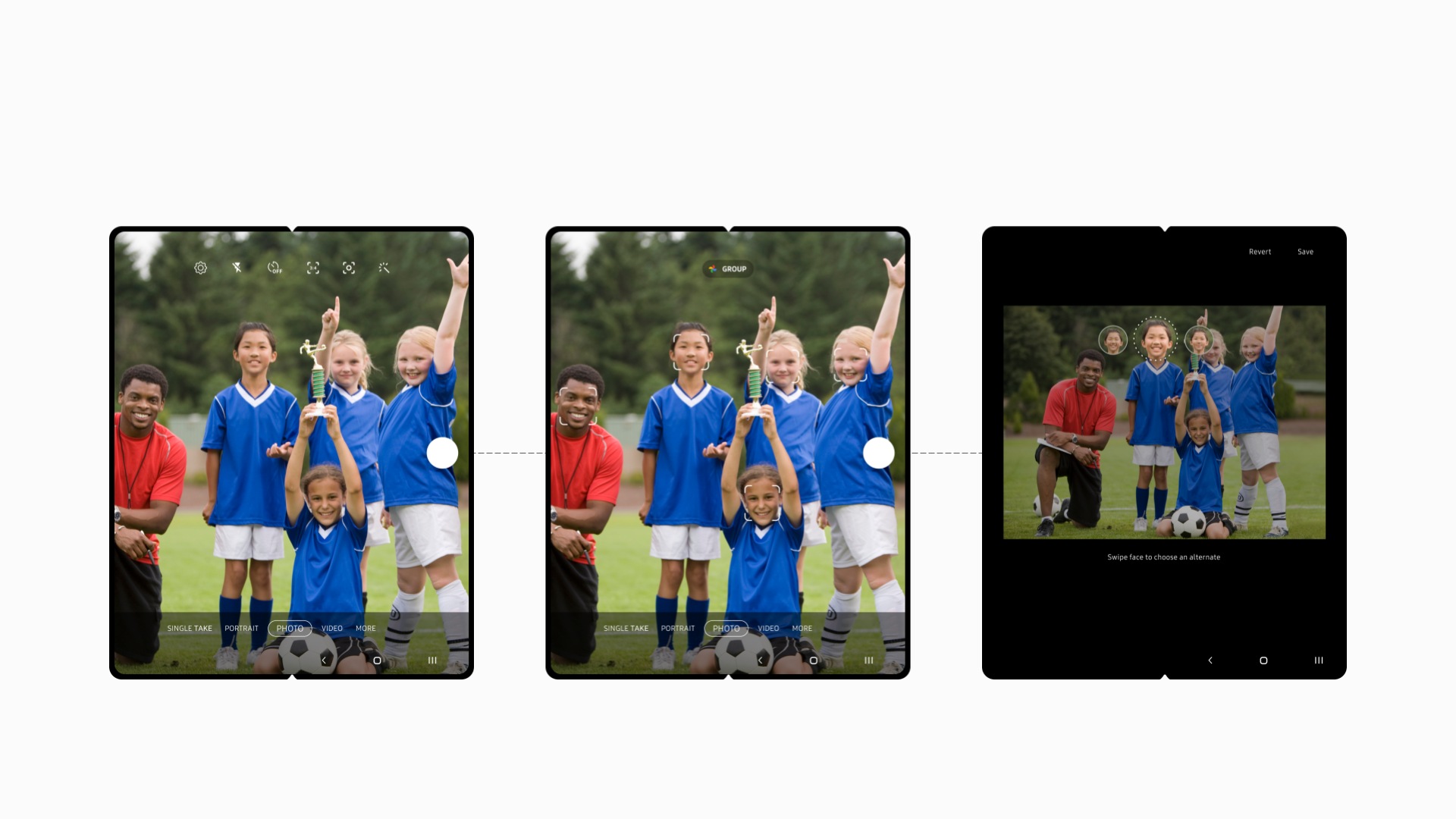
User journey: take the group shot, then swap in a better face
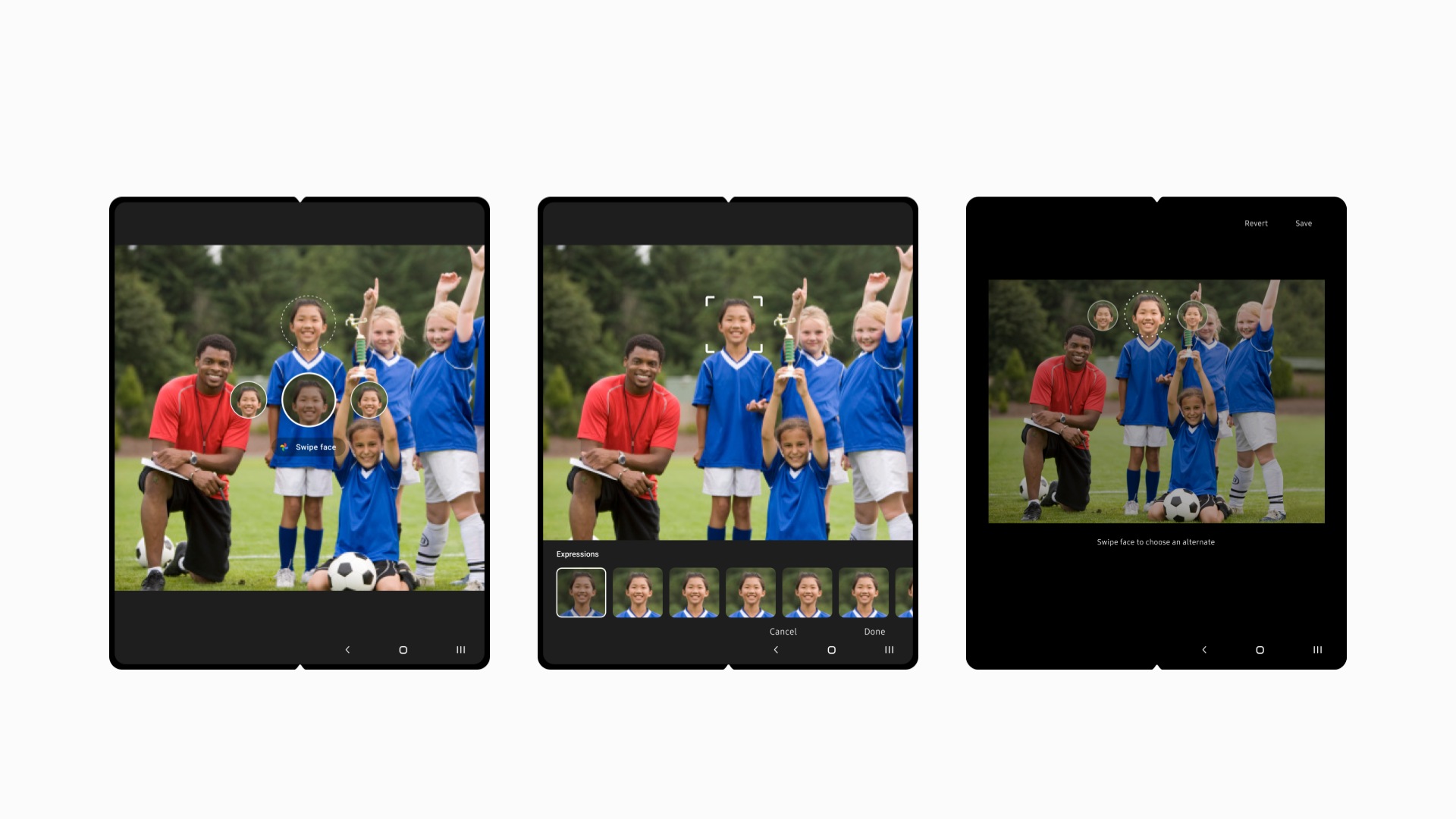
Design explorations for choosing a face: A, tap a face and swipe through the alternates in place; B, pick from a strip of expressions at the bottom; C, open the shot in a full editor and save or revert
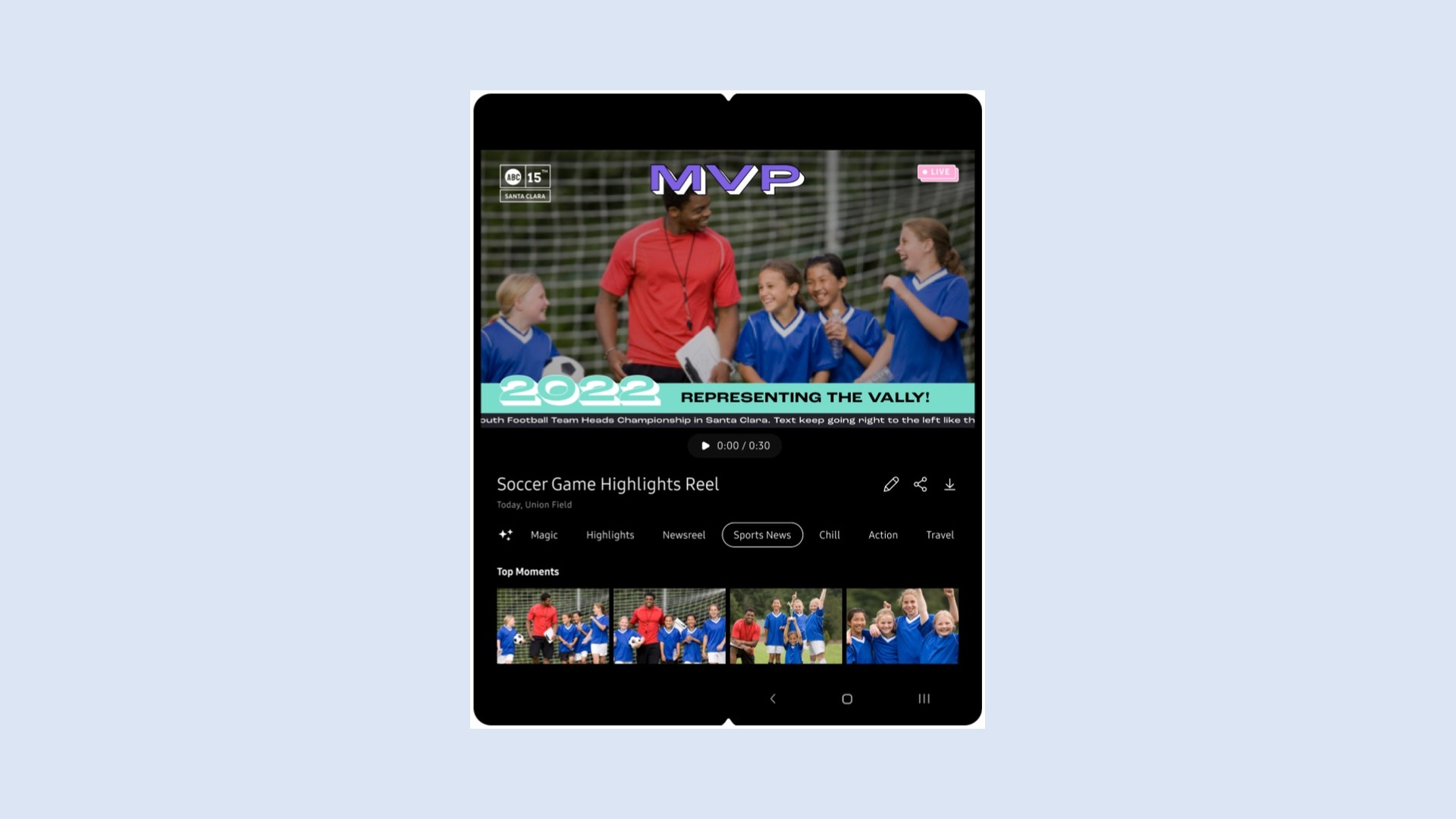
New feature: users can drop a filter onto a video, then pick the top moments for a highlight reel
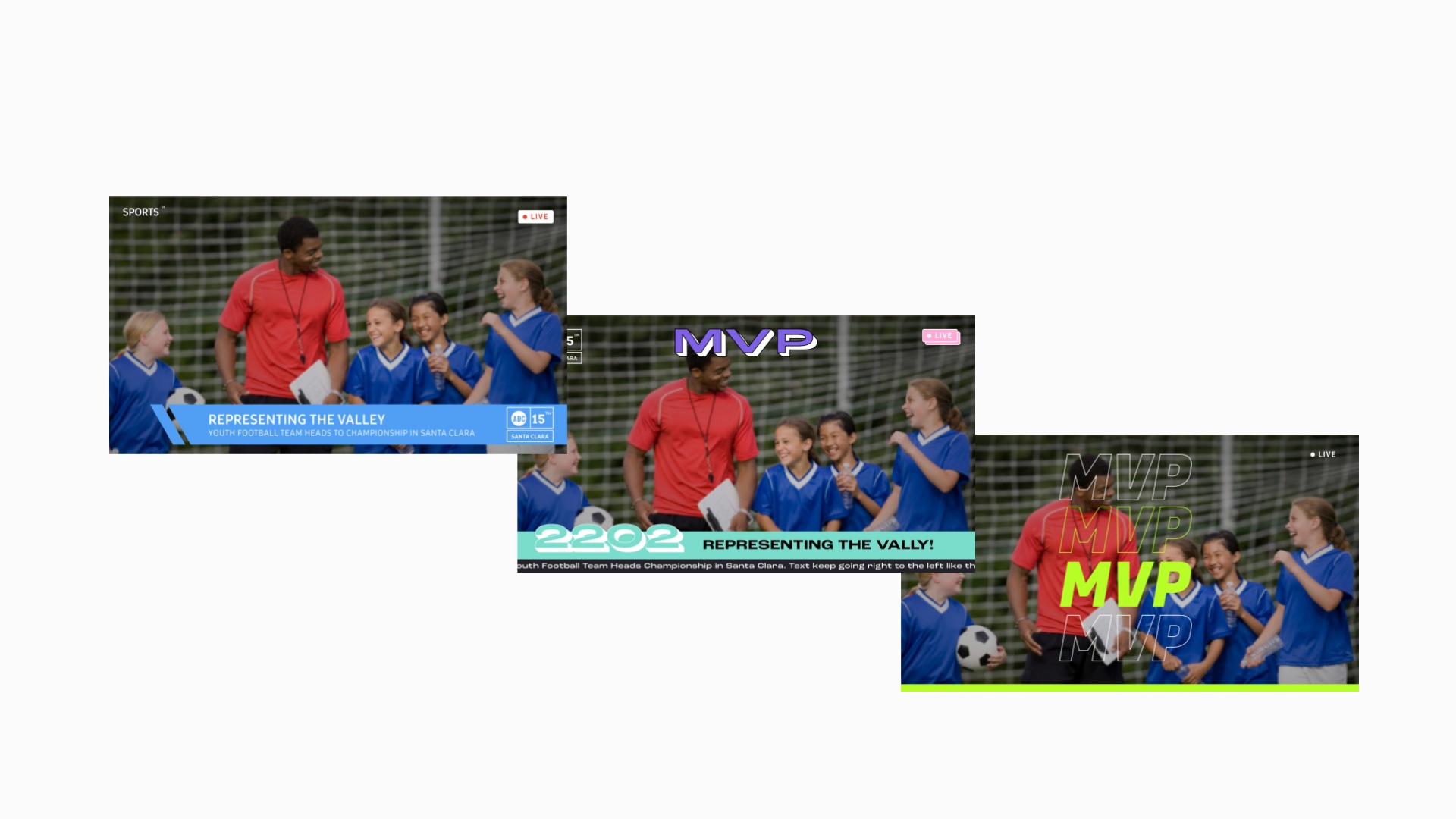
Filter graphic iterations
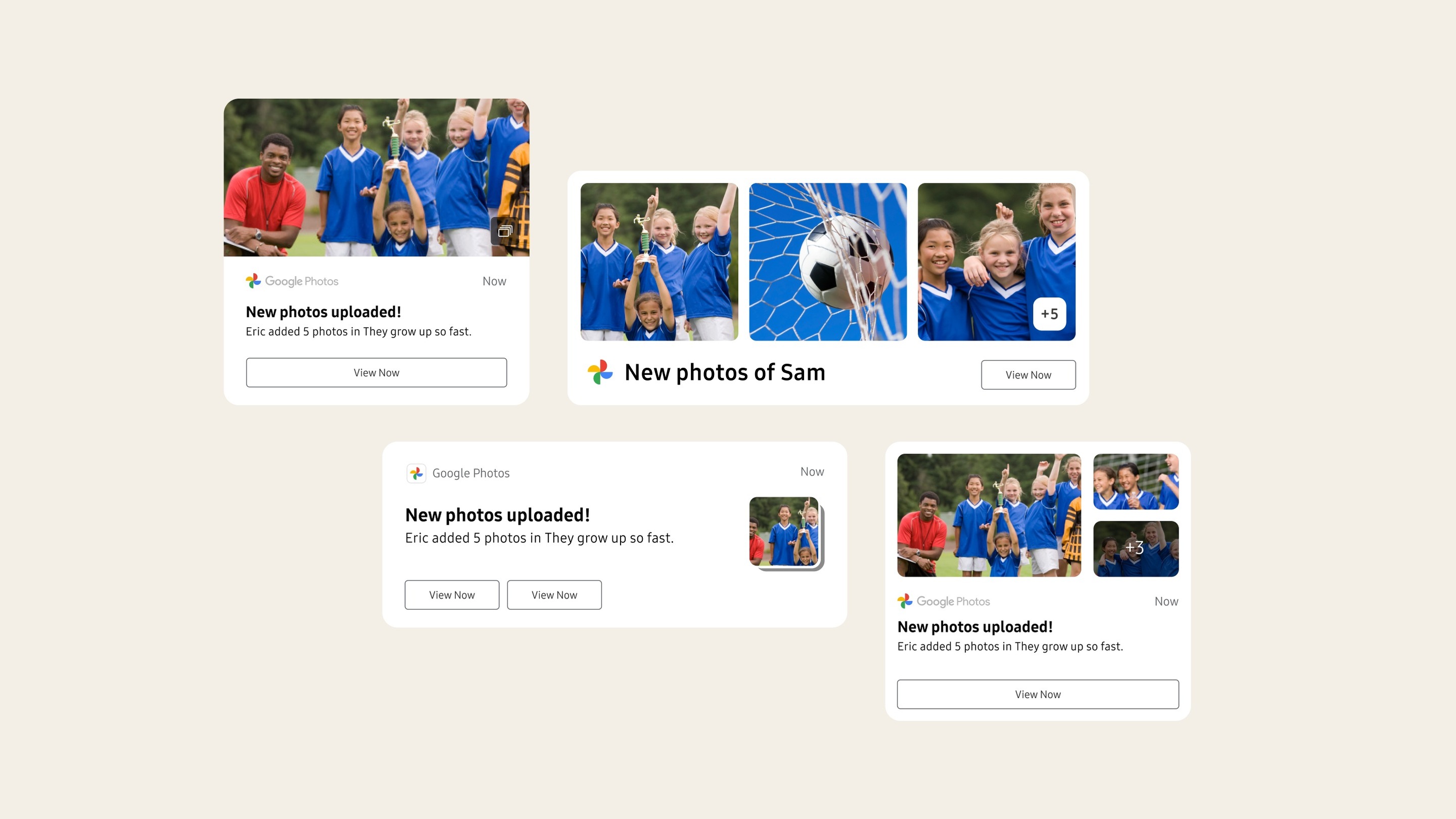
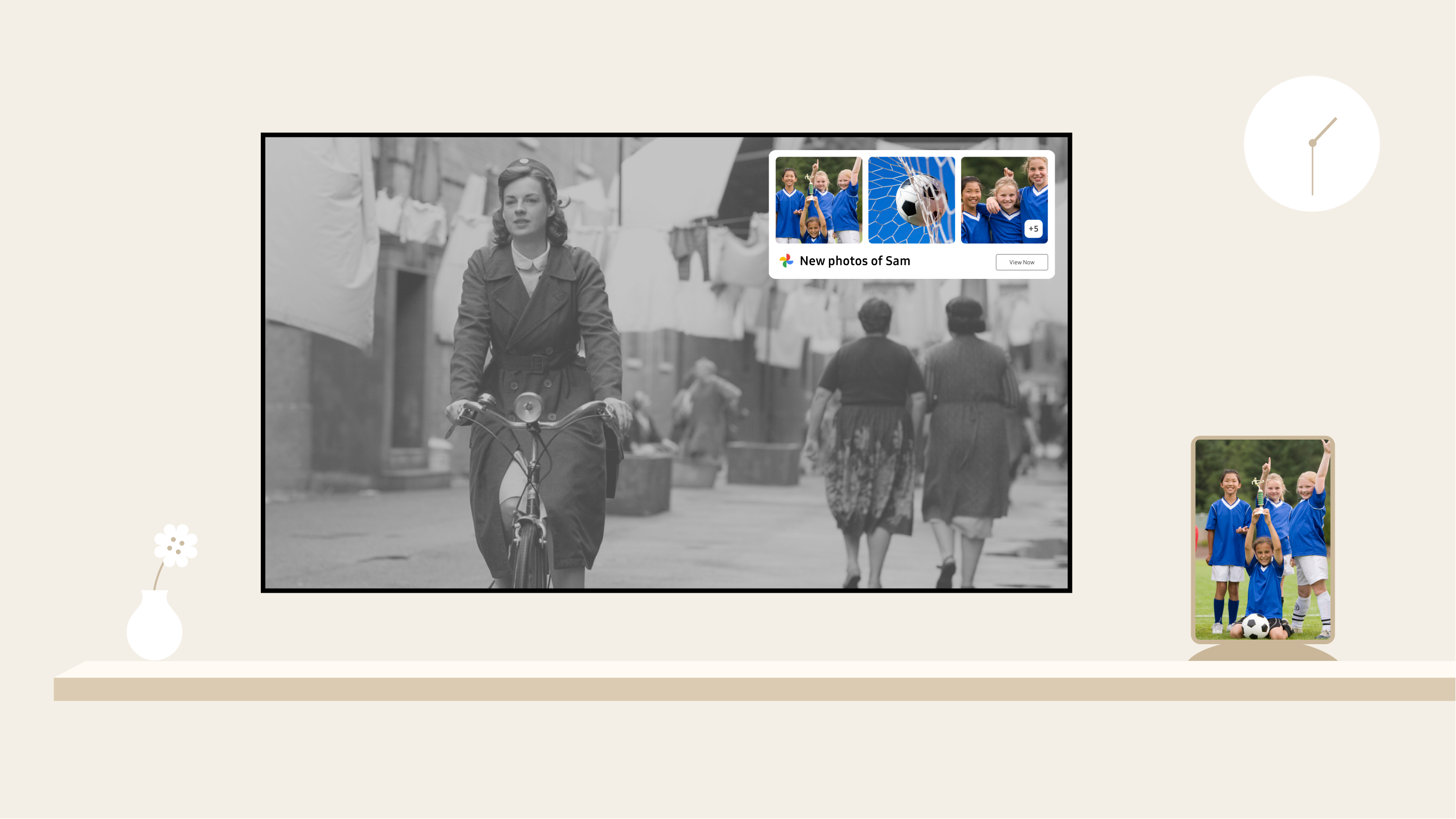
Notification card explorations. The top-right option won: on a large TV, seen from across the room, a row of photos reads faster than small text, so the card is photo-driven.
This project was hands-on practice in shaping a high-level vision while balancing two design systems. Working in a space with no strictly right answer showed me that not every edge case needs solving upfront — what grounds a vision is tangible, clear visuals across the form factors, so stakeholders can see its real-world potential.